|
|
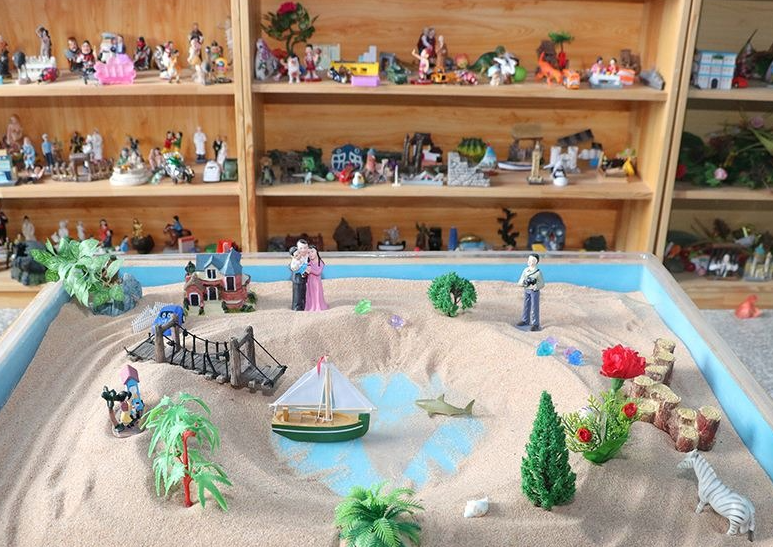
Unmasked mental sandplay: Delve deeper into the symbolism behind buildingsPsychological sand table therapy, as a highly respected means of psychological treatment, has occupied a pivotal position in the field of psychological education and counseling by virtue of its excellent cultural integration and remarkable therapeutic effect. Through a carefully designed sandbox environment, this therapy guides individuals to express their inner world in a non-verbal way, promoting self-exploration and emotional release. In the sand table, the building, as one of the core elements, not only reflects the diverse space of human activities, but also deeply contains rich symbolic meanings. They are not only the representation of physical space, but also the concrete expression of the visitor's inner world and emotional experience.
1. Housing Symbolic meaning: The house in the psychological sand table usually represents the symbol of home and belonging, but also reflects the individual's inner world and self-cognition. Specific interpretation: Tall and palatial houses may symbolize the richness of the visitor's mental expression, lofty goals, or an open mind. Old, dilapidated houses may project the visitor's tired, full of vicissitudes of mental state. The rich and orderly property in the house is the manifestation of the visitor's inner richness and orderliness. The opening of the doors and Windows of the house reflects the openness of the visitor's mind and the attitude of interacting with others, and the closed doors and Windows may symbolize self-isolation and loneliness. It is worth noting that if the visitor places a house in the sand table work, but says that he does not have his own house, this may reflect his unwillingness or dare not positively understand his own inner world, which is the resistance to self-understanding behavior. 2. Business premises Symbolic meaning: The business place in the psychological sand table usually symbolizes the superficial interest relationship in interpersonal relations. Specific interpretation: The appearance of such buildings may indicate that visitors are pursuing material interests in real life, or are more inclined to superficial and utilitarian communication in interpersonal relationships. 3. Towers and temples The symbolic meaning of the tower: The tower usually symbolizes the sublimation of the human spirit, as well as the expectation of the future and the pursuit of the heart. In some schools of psychology, the tower may also have sexual symbolism. The symbolic significance of the temple: The temple represents peace, great wisdom and spiritual tranquility, which is a kind of spiritual conversion. 4. Library Symbolic meaning: The library is a symbol of self-energy supply in the psychological sand table, representing the place to learn new knowledge and obtain new information. The appearance of the library may indicate that visitors are seeking inner peace and the nourishment of knowledge to replenish their own energy. 5. Gas Station Symbolic meaning: Gas station is the supply point of vehicle power, and in the psychological sand table, it symbolizes that individuals realize the limitation of their own power and seek external support and supplement. The appearance of a gas station may indicate that the visitor is tired or unmotivated in real life and needs outside help to rejuvenate. 6. Cash Machines Symbolic meaning: The cash machine has the symbolic meaning of replenishing energy or longing for energy in the psychological sand table. Specific interpretation: The energy brought by the cash machine comes from its own savings and potential, different from the library and gas station, it more reflects the visitors' awareness and desire for their own abilities. 7. Castles Symbolic meaning: Castles in the psychological sand table usually give people a sense of security and closed, defensive feeling, but also may symbolize vicissitudes and depression. The appearance of the castle may indicate that the visitor is feeling insecure or in need of protection in real life, but it may also reflect the closure and repression of his inner world. If the visitor explains that he or she is in the castle, this may be a sign of insecurity, oppression, and seeking escape and protection, but it may also indicate a strong sense of self-defence. To sum up, the buildings in the mental sand table have rich symbolic meanings, which not only reflect the inner world and self-cognition of the visitors, but also reveal their emotional experience and interpersonal relationship in real life. When interpreting these symbolic meanings, we need to analyze and understand the specific situation of the visitors and the overall layout of the sand table. |